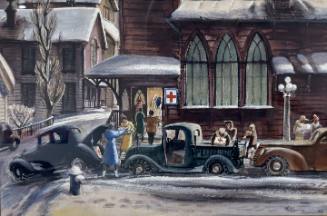
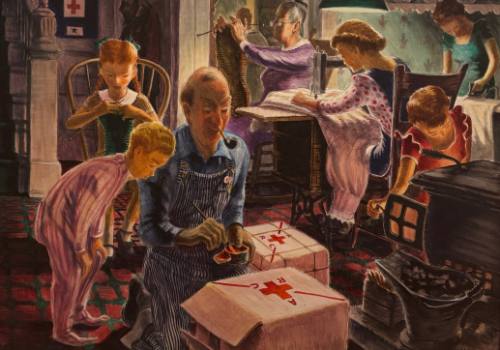
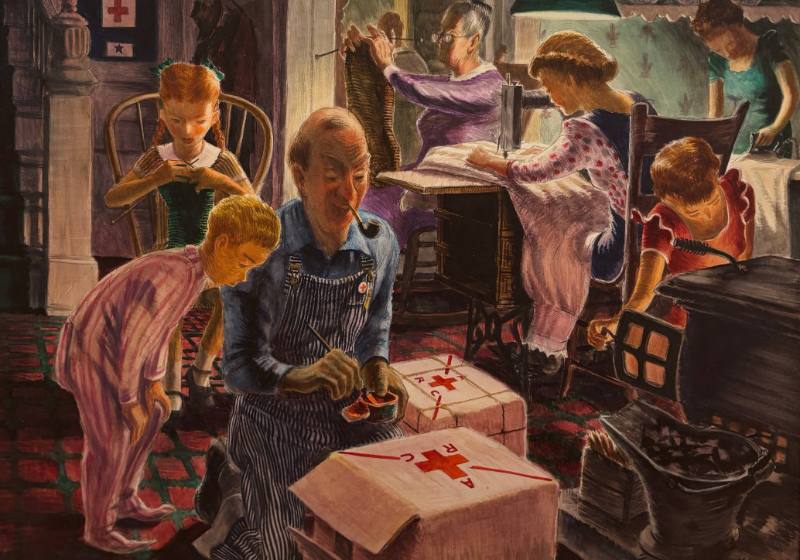
Evening on the Homefront (Red Cross)
Artist
Phil Paradise
(1905 - 1997)
Date1942
MediumWatercolor on paper
Dimensions17 x 23 in. (43.2 x 58.4 cm)
Framed (Frame is gold, wired, glazed): 26 1/2 x 32 x 1 1/4 in. (67.3 x 81.3 x 3.2 cm)
Framed (Frame is gold, wired, glazed): 26 1/2 x 32 x 1 1/4 in. (67.3 x 81.3 x 3.2 cm)
ClassificationsPainting
Credit LineThe Sally and David Martin Collection
Object number2026.040
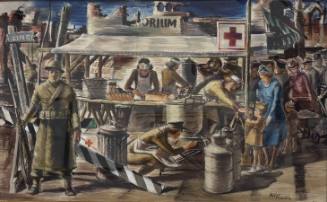
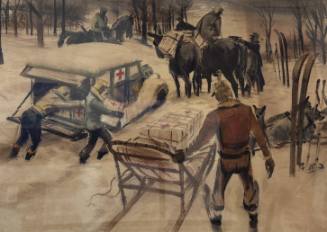
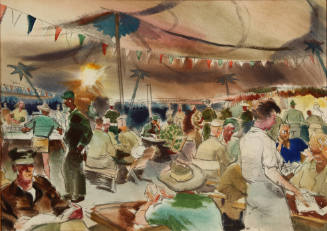
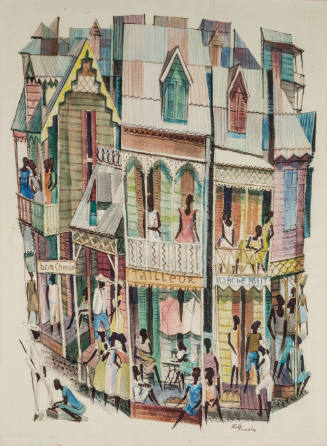
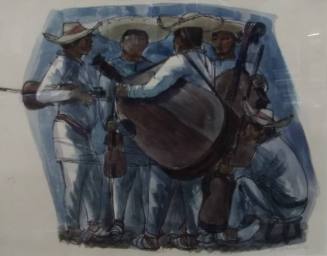
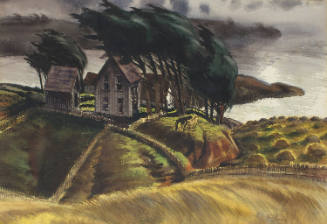
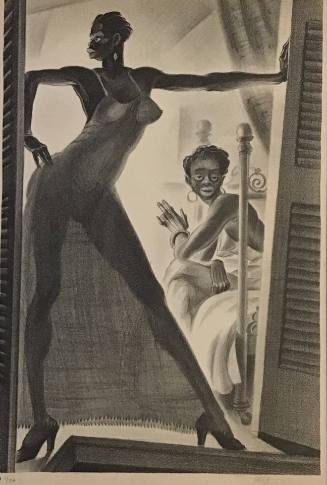
DescriptionArtist Phil Paradise wrote this about his Red Cross-related paintings: “In early 1942, the Red Cross sent out flyers asking for war and disaster relief paintings they might use in a traveling show to arouse interest in their projects.” Evening on the Homefront is one of four watercolors Paradise produced specifically for this project, and all four were accepted and included in the exhibitions. The Martins acquired all four of the paintings. This particular watercolor has often been singled out as the most engaging one of the series, and it is the one most often reproduced in books and shown in museum exhibitions of American Scene Paintings.
The overall scene captures the spirit of that era, when large numbers of Americans wanted to participate in Red Cross efforts by supporting their humanitarian efforts in general, and specifically at that time to help wounded soldiers and civilians who were suffering as a result of the ongoing war. Most important to note is the fact that agency provides its services to everyone, regardless of which side the needy individuals are on, or what their political affiliations are. The Red Cross was and is a true humanitarian operation that many Americans of that era were willing to support, not only as individuals but as a family effort.
From an artistic standpoint I recall Phil being somewhat apologetic for it being so illustrative in style, but as I told him, in my view good art is art that speaks the the heart and soul, and this falls into that category in my opinion. When the Martins and I discussed that issue, they not only agreed, but stated they determined which pieces to acquire, mostly due to the fact that the images spoke to them – both as engaging images and according to how well they thought the artist captured the feel of the era in which they were painted.
– Gordon McClelland, curator
Collections